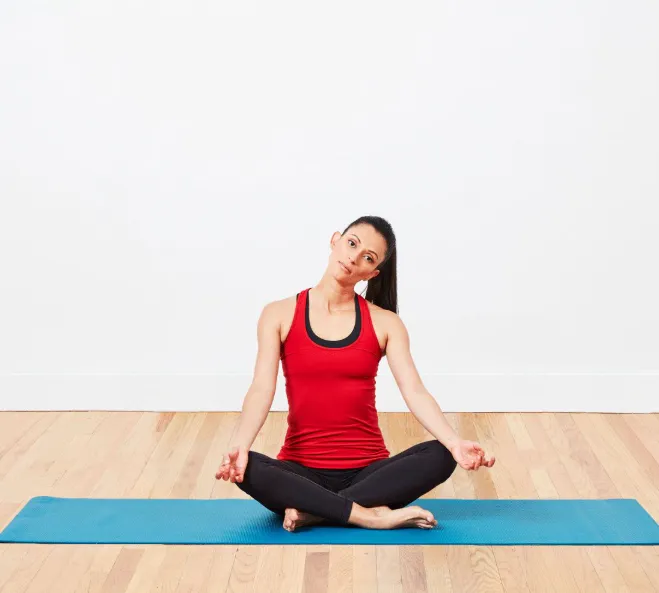
Yoga is a practice that has gained immense popularity in recent years, with millions of people incorporating it into their lives. However, despite its rise in visibility, many newcomers still feel intimidated by the complex poses seen in photos and videos. The truth is, yoga is for everyone, regardless of age or flexibility level. You don’t even need to stand to benefit from yoga!
If you’re looking for a way to start your yoga journey without the pressure of balancing on your hands or feet, seated yoga poses are a perfect way to ease into the practice. Below are five seated yoga poses that are ideal for beginners and can help you build strength, flexibility, and mindfulness.
1. Staff Pose (Dandasana)
Staff Pose is one of the simplest yet most powerful poses for beginners. It may look like nothing is happening from the outside, but it teaches you to focus on small movements that engage both your body and mind.
To get into Staff Pose, sit on your yoga mat with your legs extended straight in front of you. Keep your back as straight as possible and place your hands flat on the mat beside your hips. If you’re unable to keep your arms straight, it’s perfectly fine to touch the floor with just your fingertips.
To deepen the stretch, flex your feet and pull your belly button towards your spine. Keep your shoulders relaxed, away from your neck, and maintain a neutral head position for proper spinal alignment. Hold for several deep breaths, feeling the lengthening in your legs and back.
2. Seated Spinal Twist (Parivrtta Sukhasana)
The Seated Spinal Twist is a great pose for those who spend a lot of time sitting, as it stretches your back, shoulders, and hips, relieving tension in the spine.
From Staff Pose, bend one knee and cross it over the other leg, placing your foot flat on the floor. Take the opposite arm from the crossed leg and place your elbow on your knee. Use your arm to gently press against your knee while twisting your upper body to the side. Your other hand can rest behind you for support.
With each inhale, lengthen your spine, and with each exhale, twist a bit deeper. Lead the twist with your gaze to maintain alignment. Hold the twist for a few breaths, then gently come back to the center and repeat on the other side.
3. Seated Forward Fold (Paschimottanasana)
The Seated Forward Fold is an excellent pose for stretching the back, hamstrings, and calves. If you’ve been sitting for long periods, this stretch will feel incredibly relieving.
Start in Staff Pose, keeping your legs straight and your back engaged. Inhale and lift your arms overhead, then slowly fold forward at the hips, reaching for your feet. If you’re not yet flexible enough to reach your feet, it’s perfectly fine to rest your hands on your knees or shins.
You’ll likely feel the stretch most intensely in your hamstrings, but your glutes and back muscles will also benefit. Avoid forcing your body into the pose—aim to go deeper with each breath, stretching gently without causing strain.
4. Butterfly Pose (Baddha Konasana)
Butterfly Pose is a great way to open the hips and stretch the inner thighs. It’s a simple and soothing pose that’s accessible for all levels.
To begin, sit with your legs bent in front of you and bring the soles of your feet together. Allow your knees to drop outward like butterfly wings. You can gently flap your legs up and down to ease into the stretch. Once you’re ready, gently press your knees toward the floor. It’s okay if your knees don’t reach the ground right away—yoga is about progress, not perfection.
To deepen the stretch, gently fold your upper body forward toward the ground, keeping your back straight. Listen to your body and adjust the position of your legs and torso to ensure comfort.
5. Boat Pose (Navasana)
Boat Pose is a fantastic core-strengthening pose that also engages your hip flexors and spine. It might be challenging, but it’s incredibly effective for building strength.
Start in Staff Pose, then slowly lift your legs off the floor, bringing them together in a V shape. Extend your arms in front of you, palms facing out. Keep your legs straight and your core engaged as you hold the position. You can increase the intensity by slightly leaning back to challenge your abs further.
Hold the pose for several breaths, aiming to maintain your balance and form. If it feels too difficult, you can modify by keeping your hands on the floor or lowering your legs slightly.
Final Thoughts
These seated yoga poses are perfect for beginners looking to start their yoga practice in a way that is both accessible and beneficial. Holding each pose for 4-10 deep breaths allows you to experience the full benefits, so don’t rush and make sure to focus on your breath throughout the practice.
As you progress, feel free to add more seated poses to your routine or explore standing postures. Remember, yoga is about finding your own pace and listening to your body. Each practice will help you build strength, flexibility, and mindfulness—both on and off the mat.