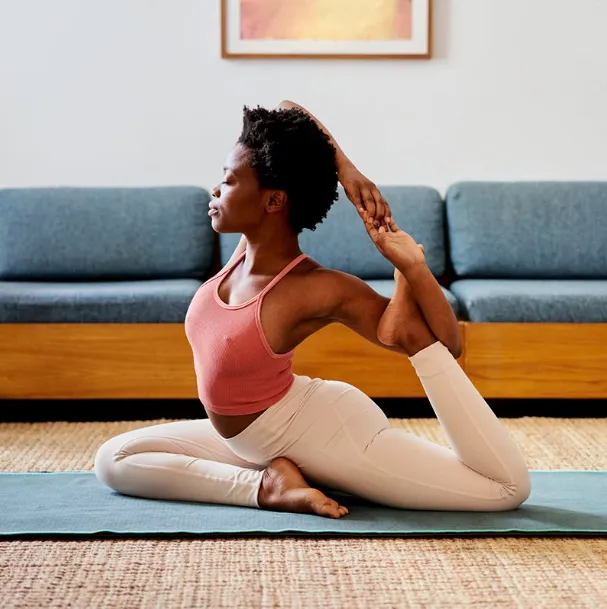
Have you ever wondered how yoga instructors maintain such high energy levels, especially early in the morning? The secret often lies in a simple, yet effective, morning yoga routine that takes no more than 15 minutes. Whether you’re new to yoga or more experienced, starting your day with a brief yoga session can offer numerous benefits for your body and mind, setting a positive tone for the rest of your day.
Establishing a morning routine is not as difficult as it seems, but sticking to it requires commitment. If you’re naturally an early riser, incorporating yoga into your morning routine will be easier. However, if you’re not typically an early bird, don’t worry – it only takes 10 minutes to feel the difference. Yoga classes, either in person or online, are available for beginners to help you build consistency in your practice.
Here’s a beginner-friendly yoga routine to kickstart your morning and help you feel energized and focused.
1. Child’s Pose (Balasana)
Child’s Pose is a gentle and grounding way to begin your yoga routine. It helps you reconnect with your breath and offers a release for your hips and lower back.
How to do Child’s Pose:
- Start by sitting on the mat with your knees apart and your big toes touching.
- Extend your arms straight in front and place your palms on the floor.
- Let your stomach fall between your thighs, bringing your forehead to the mat.
- Relax your shoulders and take deep, calming breaths in and out.
2. Cobra Pose (Bhujangasana)
The Cobra Pose is a great way to stretch your shoulders, chest, and abs while strengthening your arms and glutes. This pose also opens up the front of your body.
How to do Cobra Pose:
- Lie flat on your stomach with your legs extended and shoulder-width apart.
- Place your hands beneath your shoulders with your elbows tucked close to your body.
- Push through the tops of your feet, lifting your chest off the ground while straightening your arms. Draw your shoulders back.
- Hold the position for 30 seconds while breathing deeply, then lower yourself back down.
3. Chair Pose (Utkatasana)
Chair Pose is essentially a half squat that strengthens your legs, back, and shoulders. It challenges your balance and can be a great addition to your morning practice.
How to do Chair Pose:
- Stand with your feet close together.
- Inhale and raise your arms above your head.
- Exhale as you bend your knees, lowering your hips as if you’re sitting in a chair.
- Keep your thighs parallel to the ground, press your tailbone down, and roll your shoulders back. Hold for a few breaths.
4. Garland Pose (Malasana)
This pose helps to open your hips, thighs, and ankles. It also improves flexibility in your lower body.
How to do Garland Pose:
- Start with your feet as close together as possible and squat down.
- Turn your toes outward and bring your elbows to the inside of your knees.
- Press your knees apart as you bring your chest up and tailbone down.
- Hold the pose for a few seconds, feeling the stretch and release in your hips and thighs.
5. Cat-Cow Pose (Marjaryasana-Bitilasana)
The Cat-Cow Pose is a dynamic stretch that mobilizes the spine and helps to release tension in the back. It also improves flexibility and coordination.
How to do Cat-Cow Pose:
- Start on your hands and knees, with your wrists under your shoulders and knees under your hips.
- Inhale as you drop your belly towards the mat, lifting your chest and tailbone (Cow Pose).
- Exhale as you round your back, tucking your chin to your chest and drawing your belly button towards your spine (Cat Pose).
- Continue flowing between these two poses, syncing your breath with your movements.
Conclusion
The key to benefiting from your morning yoga routine is consistency. Although it may be challenging at first, once you get into the habit, it will become a refreshing part of your day. Practicing yoga in the morning can help you feel more energized, grounded, and ready to face whatever the day has in store. Stick with it, and you’ll quickly notice the positive impact yoga has on both your physical and mental well-being.