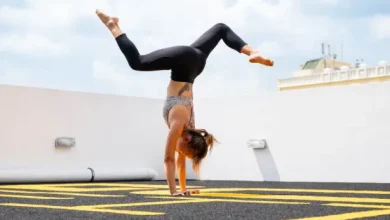
If you’re hitting the gym regularly, it’s likely you want to look strong while also improving your performance. Achieving visible abs is a common fitness goal, but developing a strong, functional core is equally important for peak performance, whether on the field or in the mountains. In this article, we’ll explore how to train for abs that not only look great but also enhance your athletic abilities.
Key Elements for Athletic Abs
There are a few crucial factors that contribute to developing athletic abs:
- Body Fat Percentage: Everyone has abdominal muscles, but they’re often hidden under a layer of body fat. To reveal your abs, achieving a lean physique through consistent nutrition and exercise is essential.
- Strength Training: Incorporating heavy, compound movements like squats, lunges, and deadlifts is crucial. These exercises engage large muscle groups, burn calories, and stimulate muscle growth. They also activate deep core stabilizers, contributing to overall core strength.
- Mechanical Stress and Time Under Tension: To build stronger, larger muscles, you need to apply mechanical stress and keep your muscles under tension for extended periods. This is why climbers often have impressive abs—they maintain core tension for long durations while climbing.
- Targeted Abdominal Exercises: The right combination of direct abdominal exercises is key to building athletic abs. Many people overlook this aspect of training, focusing only on superficial exercises like crunches. We’ll dive into the essential movements you should incorporate.
Training Your Entire Core
The abdominals are a large, complex muscle group with multiple functions, such as breathing, maintaining abdominal pressure, stabilizing the spine, and transferring force to the limbs. The core includes not only the rectus abdominis (the six-pack muscles) but also deep stabilizers, the internal and external obliques, spinal erectors, and even muscles in the glutes and back.
Core exercises that only focus on the rectus abdominis, like crunches and planks, miss out on the full potential of your core. To maximize results, you need to target all areas of your core with diverse movements.
Six Key Movements for a Strong Core
1. Flexion-Based Movements
Flexion exercises involve crunching your upper and lower body together. This includes movements like sit-ups and leg raises. To optimize these movements, slow down the tempo and focus on time under tension. A 2-1-2 tempo, where you raise up for two counts, pause at the top, and lower for two counts, can be effective. Try sets of 15-20 reps to increase tension and challenge your muscles more.
For a greater range of motion, consider using a BOSU ball or Swiss ball. This allows for a deeper stretch during the lowering phase, which you can execute with a 4-1-4 tempo.
If traditional sit-ups are hard on your back, try reverse crunches or hanging leg raises for a safer and more effective flexion exercise.
2. Extension-Based Movements
Your core isn’t just about the front of your body—it’s also crucial to strengthen the posterior chain. Exercises like deadlifts, hip thrusts, back extensions, and kettlebell swings target the muscles on your back and glutes, which are key for building a stable, strong core. Slow down the movements and focus on squeezing your glutes at the top to maximize the benefits.
3. Rotation or Twisting Movements
Rotational exercises, like Russian twists, are excellent for building oblique strength. Slow the movement down to ensure your abs are engaged throughout. You can enhance the twist by holding a light weight, like a med ball, and rotating your hands as far as possible to each side. Other great exercises in this category include landmine rotations and kettlebell windmills.
4. Anti-Flexion and Anti-Extension Movements
These movements help protect your spine by engaging deep core stabilizers. Planks are a classic example, but variations like the dead bug are also effective. To perform a dead bug, lie on your back with your lower back pressed into the floor. Slowly extend opposite arms and legs, holding for a second or two to really engage the core. Adding resistance with bands or weights can further challenge the movement.
5. Anti-Rotation Movements
Anti-rotation exercises, like the Paloff press, train your core to resist twisting forces. This is crucial for stability in real-life movements and prevents injury. Simply press a resistance band or cable outward from your chest, maintaining a strong, squared posture throughout the movement. Another great anti-rotation exercise is the suitcase carry, where you carry a heavy weight in one hand while maintaining an upright posture.
6. Abdominal Power Movements
To build abs that perform as well as they look, incorporate power training. Power exercises involve generating force quickly, which is critical for athletic performance. Use tools like medicine balls and kettlebells to perform explosive movements such as med ball slams, overhead throws, and kettlebell swings. Perform 3-4 sets of 5-10 reps, resting 1-2 minutes between sets for optimal recovery.
A Sample Ab Training Routine
Here’s a sample workout to target your entire core:
- Heavy Strength Exercise
- Squats: 3×5
- Strength Superset
- Split Squats: 3×10 per leg
- Pull-Ups (assisted if necessary): 3×8-10
- Direct Ab Work
- Dead Bug with Band: 3×5-6 per side
- Med Ball Slam: 3×5-6
This workout includes compound movements, targeted core work, and exercises designed to build both strength and power.
Conclusion
Building athletic abs requires more than just crunches. To get the best results, you need to incorporate a variety of exercises that challenge all parts of your core. By focusing on proper breathing and engaging your core throughout compound movements, using varied tempos, and incorporating movements that involve rotation and anti-rotation, you’ll develop abs that not only look great but also enhance your performance.