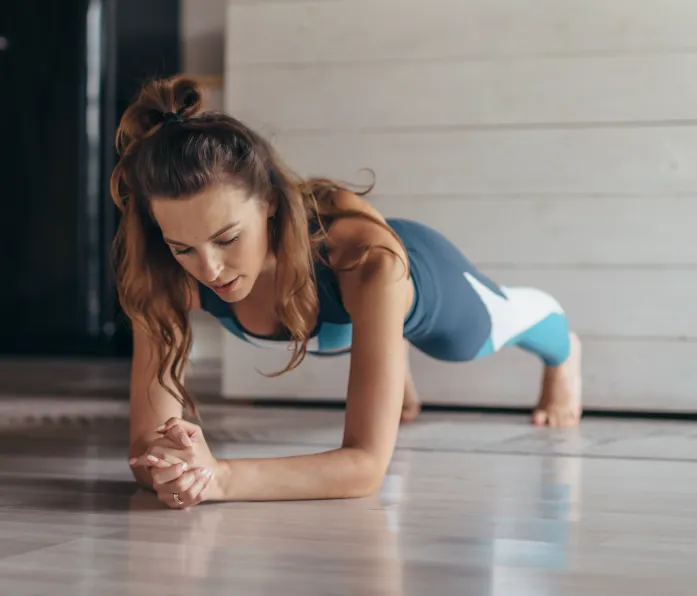
Finding time to hit the gym can be challenging for many, and you’re certainly not alone if you’ve missed more than a few workout sessions. Studies show that 67% of gym-goers don’t use their memberships regularly, with the average person only making it to the gym twice a week. Unfortunately, those sporadic sessions aren’t enough to make noticeable progress.
While nothing beats the structure and equipment of a gym, it’s entirely possible to design an effective workout routine right from your home with minimal investment. If you’re someone who struggles to find time for the gym, or just can’t make it due to other commitments, don’t worry—there are plenty of ways to stay in shape without leaving your house.
Creating a Home Gym on a Budget
Before jumping into your home fitness journey, it’s important to assess the space you have available. Do you have a basement, a garage, or even a spare room you can dedicate to exercise? Great! You’ve got plenty of room to work with. On the other hand, if your space is limited to a small corner of a room, don’t fret. With a little creativity, you can still make it work.
Designate a specific spot in your home as your workout area. Just like a gym membership gives you a physical space to focus on your fitness goals, having a dedicated area at home helps create the same “workout mode” mentality. If your space doubles as another room, consider using storage bins to keep your workout gear out of sight and organized.
Home Gym Essentials for Beginners
The beauty of working out at home is that you don’t need expensive equipment to get started. Bodyweight exercises are excellent for beginners and can be incredibly effective at toning and strengthening your muscles.
For cardio, a jump rope is an affordable and fun option. It’s a much more efficient way to get your heart rate up than running and doesn’t take up much space. You can grab a quality rope for less than $20, and trust me, after just a few minutes of jumping, you’ll feel the burn.
If you’re looking to expand your home gym a bit, resistance bands are an excellent investment. They’re affordable, take up little space, and are versatile enough for squats, lunges, presses, rows, and more.
For those with a slightly bigger budget, adjustable weights are a great option. They don’t take up much space and can be adjusted from 2.5 lbs to 25 lbs, depending on the model. A set of kettlebells is another great addition, particularly for exercises like squats and swings. While they can be a bit more expensive, they offer endless workout possibilities and are well worth the investment.
Pull-up bars, typically priced around $30, are another useful tool. You can easily install one in a doorway and use a chair or resistance bands to assist with pull-ups if you’re not yet able to do one on your own.
If weightlifting isn’t your style, or you’re on a tighter budget, suspension trainers like the TRX Go! are an affordable option that provides a full-body workout and can be hung from a doorway or ceiling. These can be used for a variety of exercises and are easy to take with you when traveling.
Designing a Hybrid Home/Gym Workout Plan
A well-rounded strength training program should involve 3-4 days of resistance exercises. If you can manage 1-2 gym sessions per week, complement them with 1-2 home workouts. Here’s how you can split your week:
Gym Days:
Focus on heavy compound exercises such as squats, lunges, deadlifts, and presses. The goal is to use more weight and fewer reps to build strength. Aim for 3-8 reps per set, choosing weights that challenge you by the last few reps.
Here’s an example of a 2-day gym split:
Day 1:
- Barbell squat: 4 sets of 5 reps
- Barbell or dumbbell shoulder press: 4 sets of 6-8 reps
- Lat pulldown or assisted pull-ups: 4 sets of 6-8 reps
- Back extensions: 3 sets of 15 reps
Day 2:
- Barbell deadlift: 4 sets of 5 reps
- Barbell bench press: 4 sets of 5 reps
- Goblet squats: 3 sets of 12 reps
- Dumbbell single-arm row: 3 sets of 12 reps per arm
Home Workouts:
At home, your workouts will focus on keeping your heart rate high. Instead of traditional sets and reps, circuit training is a great way to incorporate full-body movements with minimal rest.
Try this 15-20 minute circuit, focusing on bodyweight exercises:
- 20 bodyweight squats
- 10 pike push-ups (modify with plank shoulder taps)
- 20 forward lunges (or reverse lunges for those with knee issues)
- 10 push-ups (modify by elevating your hands on a stable surface)
- 20 lateral lunges (or plyo skater lunges for an advanced challenge)
- 10 walkouts to plank (reach as far as you can for an added challenge)
- 10 prone back extensions
Perform this circuit as many times as possible until time runs out, moving at a steady pace and minimizing rest.
Incorporating Resistance Bands
If you have resistance bands, they’re perfect for adding intensity to your home workouts. You can replicate gym exercises like squats, lunges, and presses with bands. As you stretch the band, the tension increases, making the movement more challenging. This “accommodating resistance” can help build strength and muscle mass more effectively.
Dumbbells and Kettlebells
For those with the budget to invest in a kettlebell or dumbbells, these can add a lot of variety to your home workouts. Kettlebell swings, for example, work your posterior chain and provide an excellent cardiovascular workout, while dumbbells are great for exercises like rows, presses, and bicep curls.
Suspension Trainers
If you’re looking for versatility, suspension trainers like the TRX Go! can provide a full-body workout. They force you to engage your core and stabilizing muscles for every exercise, making them highly effective for toning and strengthening.
When training with suspension trainers, aim for higher reps (15+ per set) and use a circuit approach to maximize the benefits.
No Excuses: Stay Active, Stay Fit
Even if you can’t commit to the gym every day, you can still stay in great shape with home workouts. Whether you’re doing bodyweight circuits, using resistance bands, or jumping rope for cardio, there’s no reason to skip your workout just because you can’t get to the gym. You’ll be surprised at how effective home workouts can be, especially when you mix things up and stay consistent.
Blog Title: How to Stay Fit Without the Gym: A Comprehensive Home Workout Plan
5 Unique Exercise Variations to Add Excitement to Your Strength Training Routine
Are you getting tired of the same old workout routine? You’re certainly not alone. One of the main reasons people lose motivation to work out is because their training program has become monotonous. The key to a successful workout plan is finding a balance between mastering fundamental movements—like squats, presses, and rows—and adding enough variation to keep things interesting.
While doing the same exercise over and over may help you master a movement, it can also lead to boredom, burnout, and even injury. If you feel like you’re stuck in a rut, it might be time to switch things up with some less conventional exercise variations. These unique movements can challenge your body in different ways, leading to improved strength and better results. Just remember, practice these variations for 4-6 weeks before switching to something new.
1. Hack Squat: A Quirky Squat Variation
If you’re looking for a squat variation that targets your quads more directly, the hack squat is a great option. This movement is similar to a deadlift, but with the barbell positioned behind your body, rather than in front. The unique loading pattern of the hack squat shifts the focus to your quadriceps, which makes it a useful alternative to traditional front or back squats or even the leg press machine.
You can adjust the weight to either focus on building strength with heavier loads in the 3-5 rep range or use moderate weights for higher reps to sculpt and define your legs. While it may look a bit strange, the hack squat is a great way to spice up your leg training.
2. Jefferson Deadlift: A Different Way to Deadlift
If you’re after a lower body movement that challenges your body in a new way, try the Jefferson deadlift. This exercise involves straddling the barbell, with one leg positioned in front of the bar and the other behind. The unique setup adds an anti-rotation element to the hip hinge movement, forcing your core to work hard to resist any twisting.
The Jefferson deadlift may seem odd at first, but it’s an excellent way to improve your deadlift and enhance your core stability. Plus, it hits the posterior chain in a way that traditional deadlifts may not.
3. Javelin Press: Push Your Shoulders to the Limit
Looking to work your shoulders in a different way? The javelin press is an exercise that requires shoulder stability and strength, making it a great alternative to the standard overhead press. By holding the weight in a single arm and pressing it overhead, this variation forces your rotator cuff muscles to work harder, helping you develop greater shoulder stability.
Incorporating the javelin press into your routine can help correct imbalances between your shoulder muscles and avoid potential injuries down the line. It’s a great movement to build shoulder strength and stability while also adding variety to your training.
4. Bird Dog Row: Target Your Back and Core
This exercise combines a core-strengthening movement with an upper body pulling exercise to give you a full-body challenge. The bird dog row involves starting in a quadruped position (on all fours), extending one leg behind you, and rowing a weight in the opposite hand toward your torso.
This movement targets your back muscles while engaging your core to maintain stability. By focusing on proper form and keeping your back flat, the bird dog row helps build strength in your back, shoulders, and core all at once. It’s a great way to develop coordination and functional strength.
5. Turkish Sit-Ups and Get-Ups: Master Full-Body Control
The Turkish sit-up and its more advanced variation, the Turkish get-up, are complex movements that work nearly every muscle in your body. The Turkish sit-up begins with you holding a weight overhead while you stabilize it with one arm, all while transitioning your body weight to the opposite hand.
This exercise is an excellent way to strengthen your obliques and build shoulder stability. Start by mastering the sit-up portion of the movement, then progress to the full Turkish get-up, which involves rising to a standing position from the floor.
While this movement requires patience and practice, it’s incredibly rewarding once you get the hang of it. The Turkish get-up is a fantastic full-body exercise that improves mobility, stability, and strength.
Wrap Up
These five unique exercise variations are a great way to break the monotony of your current workout routine. Adding new movements to your strength training can help you develop greater strength, stability, and coordination. Stick with each variation for 4-6 weeks, and you’ll likely see improvements in your overall performance, whether you’re squatting, deadlifting, pressing, or rowing. So give these exercises a try and keep your training fresh and exciting!