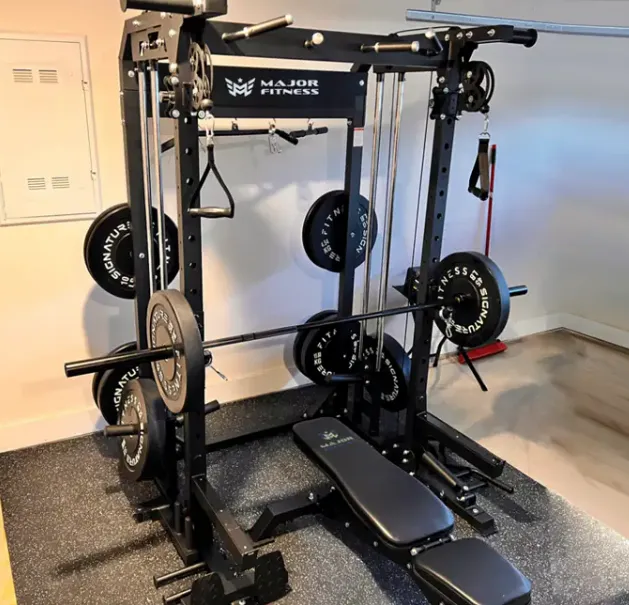
Home workouts often get a bad rap for not being as effective as those done in fully equipped gyms, and while it’s true that having all the latest equipment can enhance your training, there are still plenty of ways to make your at-home routine incredibly effective. Whether you’re working with minimal equipment or you’ve dedicated a full room to fitness gear, here are some tips to help you make the most of your home workouts.
Essential Equipment for Home Workouts
Creating a home gym doesn’t need to break the bank. While a fully equipped garage gym is fantastic, you can build a well-rounded setup without spending a fortune. For around $100-$300, you can assemble a solid workout station. To put it in perspective, that’s roughly what you’d spend on a gym membership for about 7.5 months.
Here’s a breakdown of what you might consider, depending on your budget and available space:
Must-Have Basics
- Jump Rope – Ideal for cardio and conditioning.
- Stackable Resistance Bands – With carabiners for easy use.
- Heavy Dumbbells or Kettlebells – A single kettlebell or set of dumbbells (20-25 lbs for women, 30-35 lbs for men) will allow you to do squats, deadlifts, and swings effectively.
For these essentials, you can expect to spend around $100-$150.
Nice-to-Have Extras
- Stability Ball
- Foam Roller or Mobility Tools
- Yoga Mat
- Pull-Up Bar
- Heavy Resistance Bands
- Suspension Trainer (TRX)
- Furniture Sliders
- Additional Dumbbells or Kettlebells
For these additions, the cost could range from $100 to $400, depending on weight options and whether you opt for new or used equipment.
High-End Additions (For Those With Extra Space)
- Adjustable Dumbbells – A more versatile option that can replace several dumbbells, typically priced at $350+.
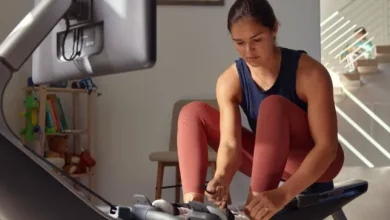
- Cardio Equipment – A bike, rower, or similar equipment for improving endurance.
Though they can be pricey, adjustable dumbbells and cardio equipment can offer significant variety in your workouts.
Tips for Effective Home Workouts
While your home gym may not compare to a commercial fitness facility, there are many ways to intensify your at-home workouts and keep things engaging.
1. Cut Down on Rest Time
When using lighter weights, the intensity naturally decreases, which means you don’t need long rest periods. For example, if you’re used to resting for 60-90 seconds between sets, try cutting that down to 30-45 seconds. You can also switch to circuits, which involve performing 3-5 exercises in a row without taking breaks, creating a more challenging workout.
2. Incorporate Time-Based Workouts
AMRAP (As Many Rounds As Possible) workouts are perfect for short, high-intensity training sessions. By focusing on getting as many reps as possible within a set time frame (typically 20 minutes or less), you can increase the density of your workout, promoting fat loss and muscle growth.
3. Focus on Tempo
Your muscles respond to the time they spend under tension, not just the weight being lifted. By adjusting the tempo of your lifts, you increase that tension. For example, a 2-0-2-0 tempo means lowering the weight in 2 seconds, lifting it in 2 seconds, and pausing briefly at the top. Slowing down the movement can enhance your results, even with lighter weights.
4. Add Pauses and Isometrics
Pauses and isometric holds can make exercises significantly more challenging. For example, in a squat, pausing for a few seconds at the bottom increases the difficulty by removing any momentum, forcing your muscles to work harder. You can also try isometric holds, where one muscle is held stationary while the other works through the movement, such as holding a curl at a 90-degree angle while performing the other side.
5. Try Giant Sets for Muscle Growth
Giant sets involve performing three or more exercises targeting the same muscle group in quick succession. This approach will really exhaust the muscles, promoting muscle growth even when using lighter weights. For example, for chest, you might do a combination of chest flys, push-ups, and dumbbell presses.
6. Use Gravity to Vary the Challenge
Adjusting the angle of exercises like push-ups can change their difficulty. Elevating your hands makes them easier, while elevating your feet increases the difficulty. You can also apply this concept to pull-ups, lunges, or any other exercise where gravity plays a role. By starting with the hardest variation and gradually moving to easier ones, you can push your muscles to their limits.
7. Boost Strength with Plyometrics
Plyometric exercises, such as jump squats or clap push-ups, activate your fast-twitch muscle fibers and prime your body for the strength exercises that follow. Pairing these explosive movements with traditional strength training, like push-ups or squats, can improve both athletic performance and muscle gains.
With these strategies, you can get a highly effective workout at home, whether you’re using minimal equipment or have more space and resources. The key is to keep your workouts varied, challenging, and efficient to maximize the benefits from your home routine.